



If your HbA1c falls in the prediabetic range, you are standing at an important crossroads. The good news is simple and hopeful — you can bring HbA1c back to normal naturally with the right lifestyle changes.
No panic.
No extreme dieting.
Just consistent, science-backed habits.
This guide explains how to lower HbA1c naturally from prediabetic to normal, in a practical and sustainable way.
What Does HbA1c Really Mean?
HbA1c reflects your average blood sugar over the last 2–3 months.
It gives a bigger picture than a single fasting or random glucose test.
HbA1c ranges:
- Normal: below 5.7%
- Prediabetes: 5.7% – 6.4%
- Diabetes: 6.5% and above
Lowering HbA1c is not about quick fixes. It responds to daily choices repeated over time
Can You Lower HbA1c Naturally?
Yes — and many people do.
Research and clinical guidelines from trusted bodies like the American Diabetes Association confirm that diet, movement, sleep, and stress control can significantly reduce HbA1c, especially in prediabetes.
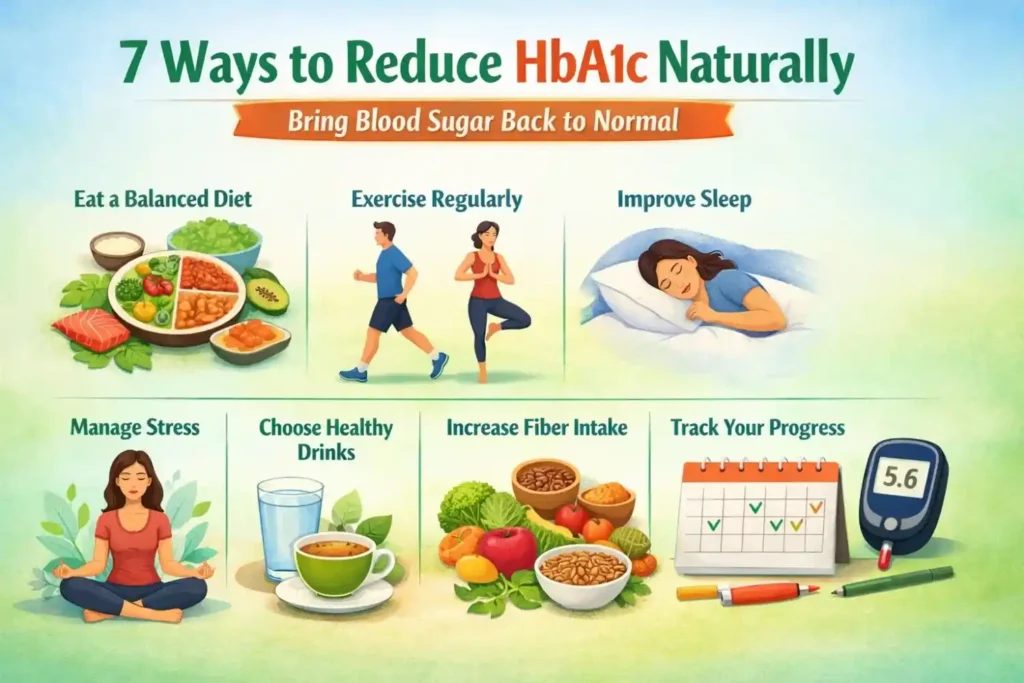
1. Eat to Stabilize Blood Sugar (Not to Starve)
Food directly influences HbA1c. Focus on steady glucose control, not restriction.
What to Eat More Often
- Non-starchy vegetables (spinach, broccoli, gourds)
- Whole grains in small portions (oats, millets, brown rice)
- Plant proteins (lentils, beans, tofu, paneer)
- Healthy fats (nuts, seeds, olive oil)
- Eggs (if eggetarian)
What to Reduce
- Refined carbs (white bread, maida, sugary snacks)
- Sweetened drinks and packaged juices
- Excess sweets, even “natural” sugars
Smart tip:
Always pair carbs with protein or fiber. This slows sugar absorption.
2. Follow the Plate Method
A simple visual rule works better than calorie counting.
- ½ plate: vegetables
- ¼ plate: protein
- ¼ plate: whole grains
This method prevents blood sugar spikes without mental fatigue.
3. Move Every Day (Consistency Beats Intensity)
You don’t need the gym to lower HbA1c.
Effective options:
- 30–40 minutes of brisk walking
- Light strength training 2–3 times a week
- Yoga or stretching after meals
Movement helps muscles absorb glucose without extra insulin. Over time, HbA1c drops naturally.
4. Improve Sleep and Manage Stress
Poor sleep raises insulin resistance. Chronic stress pushes sugar levels up.
Simple habits that help:
- Fixed sleep schedule
- Screen-free time before bed
- Breathing exercises or short meditation
Even small improvements in sleep quality reflect positively in HbA1c results.
5. Be Smart With Beverages
- Water should remain your main drink
- Unsweetened green tea or black coffee in moderation can help insulin sensitivity
- Avoid sugary beverages and frequent fruit juices
Hydration supports metabolic balance and appetite control.
Staying consistent with water intake offers more than thirst relief—the 10 incredible benefits of hydration include better metabolism, appetite control, and improved blood sugar balance.
6. Add Fiber-Rich Foods Daily
Fiber slows glucose absorption and improves gut health.
Easy additions:
- Flaxseeds (ground, 1 tsp daily)
- Chia seeds
- Vegetables with skin
- Whole fruits instead of juices
Fiber intake plays a quiet but powerful role in lowering HbA1c.
7. Track Progress Without Obsession
Check HbA1c every 3 months.
Focus on habits, not daily sugar anxiety.
Consistency matters more than perfection.
8. Control Stress Before It Controls Your Sugar
Chronic stress elevates cortisol.
High cortisol pushes blood sugar upward.
Daily stress tools:
- Deep breathing (5 minutes)
- Short meditation
- Nature walks
- Journaling
Practices like journaling are part of simple habits that quietly improve mental health, helping lower stress hormones and support better blood sugar control.
Stress management is not optional when trying to lower HbA1c naturally.
9. Build a Low-Glycemic Lifestyle
Choose foods that do not spike sugar quickly.
Low-GI examples:
- Beans and lentils
- Sweet potato
- Oats
- Apples, berries, pears
- Nuts and seeds
High-GI foods spike glucose and slow HbA1c progress.
10. Eat at Consistent Times
Irregular eating disrupts insulin rhythm.
Try:
- Fixed breakfast time
- Balanced lunch
- Light dinner before bedtime
Regular meals help the body regulate sugar efficiently.
11. Support Gut Health
A healthy gut improves insulin response.
Include:
- Curd or yogurt
- Fermented foods (idli, dosa batter, kimchi, sauerkraut)
- Prebiotic fibers (onion, garlic, banana, oats)
Gut health directly affects glucose control.
12. Avoid Long Sitting Periods
Sitting for hours raises glucose even after healthy meals.
Stand or walk for 5–10 minutes every hour.
Short movement breaks reduce post-meal sugar significantly.
Build a “Low-Sugar Morning” Routine (Habit Stacking That Works)
Q1. Can HbA1c be reduced naturally from prediabetic to normal?
Yes. Many people reduce HbA1c naturally through balanced meals, regular physical activity, weight management, better sleep, and stress control—without medication when caught early.
Q2. How long does it take to lower HbA1c naturally?
HbA1c reflects average blood sugar over 8–12 weeks. Consistent lifestyle changes usually show results within 2–3 months.
Q3. Does cutting sugar alone lower HbA1c?
No. Reducing sugar helps, but fiber intake, protein balance, physical activity, and sleep quality matter just as much.
Q4. Is exercise necessary to reduce HbA1c?
Yes. Even daily walking improves insulin sensitivity and helps lower HbA1c naturally.
Q5. Can stress affect HbA1c levels?
Yes. Chronic stress raises cortisol, which can increase blood sugar and HbA1c levels.
The first 90 minutes of your day strongly influence your blood sugar pattern. Instead of chasing perfection, build a simple routine that gently lowers HbA1c over time.
Why this matters for lowering HbA1c naturally
Your body is more insulin-resistant in the morning. A thoughtful start prevents early glucose spikes that can affect the rest of your day.
A practical, repeatable morning flow
- Start with plain water (hydration improves glucose handling).
- Eat within 60–90 minutes of waking.
- Choose protein before carbs.(Vegetarian protein source)
- Avoid sugar, packaged cereals, or sweetened drinks first thing.
Smart breakfast choices that support HbA1c
- Eggs or paneer with vegetables
- Oats with nuts and seeds (no added sugar)
- Sprouts chaat with lemon
- Curd with flax or chia seeds
What to avoid in the first hour
- Fruit juice (even “fresh”)
- Sweetened tea/coffee
- White bread, biscuits, or sugary cereals
This routine reduces morning sugar surges and sets a stable metabolic tone for the entire day.
14. Time Your Carbohydrates Strategically (Not Just What You Eat, But When)
Many people focus only on food quality. Smart carb timing can make a big difference in how to lower HbA1c naturally from prediabetic to normal.
Why timing matters
Your body handles carbohydrates better earlier in the day than late at night. Poor timing can raise average glucose even if your diet looks “healthy.”
Best carbohydrate timing strategy
- Eat most carbs at breakfast and lunch.
- Keep dinner lighter and more protein-heavy.
- Reduce refined carbs after sunset.
Example of smart carb distribution
- Morning: oats, millets, or one roti
- Lunch: balanced plate with controlled whole grains
- Dinner: vegetables + protein, minimal carbs
Small but powerful rules
- Never eat carbs alone — always pair with protein or fiber.
- Avoid large rice portions at night.
- Choose whole, unprocessed carbs over refined ones.
Over 8–12 weeks, better carb timing can noticeably lower HbA1c without extreme restriction.
15. Strengthen Your Muscles to Improve Insulin Sensitivity
Muscle plays a quiet but critical role in blood sugar control. More muscle means better glucose storage and lower HbA1c.
Why muscle matters for HbA1c
Your muscles act like glucose “sinks.” Stronger muscles absorb sugar more efficiently, reducing average blood glucose levels.
Beginner-friendly strength routine (2–3 times/week)
- Bodyweight squats (10–15 reps)
- Wall push-ups (8–12 reps)
- Glute bridges (10–15 reps)
- Light resistance band rows (8–12 reps)
No gym? No problem
- Use bodyweight exercises at home.
- Start slow and build gradually.
- Focus on consistency, not intensity.
How strength training complements walking
- Walking controls daily glucose spikes.
- Strength training improves long-term insulin sensitivity.
- Together, they create the strongest impact on HbA1c.
Simple rule to remember
If you want to lower HbA1c naturally, don’t just burn calories — build muscle.
How Long Does It Take to See Results?
HbA1c reflects 8–12 weeks of behavior.
Most people see improvement within 3 months of consistent lifestyle changes.
Small daily wins add up faster than you expect.
Final Thoughts
Lowering HbA1c naturally from prediabetic to normal is not about fear — it is about awareness.
When you eat better, move more, sleep well, and stay consistent, your body responds.
You don’t need extreme rules.
You need sustainable habits that fit real life.
For more practical health and lifestyle guides, visit Wordsfloww.
Medical Disclaimer
Everybody is different, and health outcomes can vary based on age, lifestyle, genetics, and existing medical conditions. The information shared in this article is for educational purposes only and should not replace professional medical advice. Always consult your doctor, dietitian, or healthcare provider before making changes to your diet, exercise routine, or supplement intake—especially if you have diabetes, prediabetes, or any underlying health condition.