


Keeping your skin protected from the sun is non-negotiable—no matter your age, skin type, or makeup routine. But one question almost every woman asks at some point is:
Sunscreen before or after makeup?
This confusion seems small, but the order you follow decides how well your skin stays protected, how long your makeup lasts, and how healthy your skin looks over time.
Let’s break it down simply so you never second-guess your routine again.
Should Sunscreen Go Before or After Makeup?
Sunscreen ALWAYS goes before makeup.
Why?
Because sunscreen works best when it forms a protective, even layer directly on your skin.
If you apply it after makeup, it cannot create that uniform shield—and your skin will not receive proper UV protection.
“According to dermatologists, sunscreen is essential for daily skin protection.” — Healthline https://www.healthline.com/health/beauty-skin-care/how-to-apply-sunscreen
Correct Order of Skincare + Makeup with Sunscreen
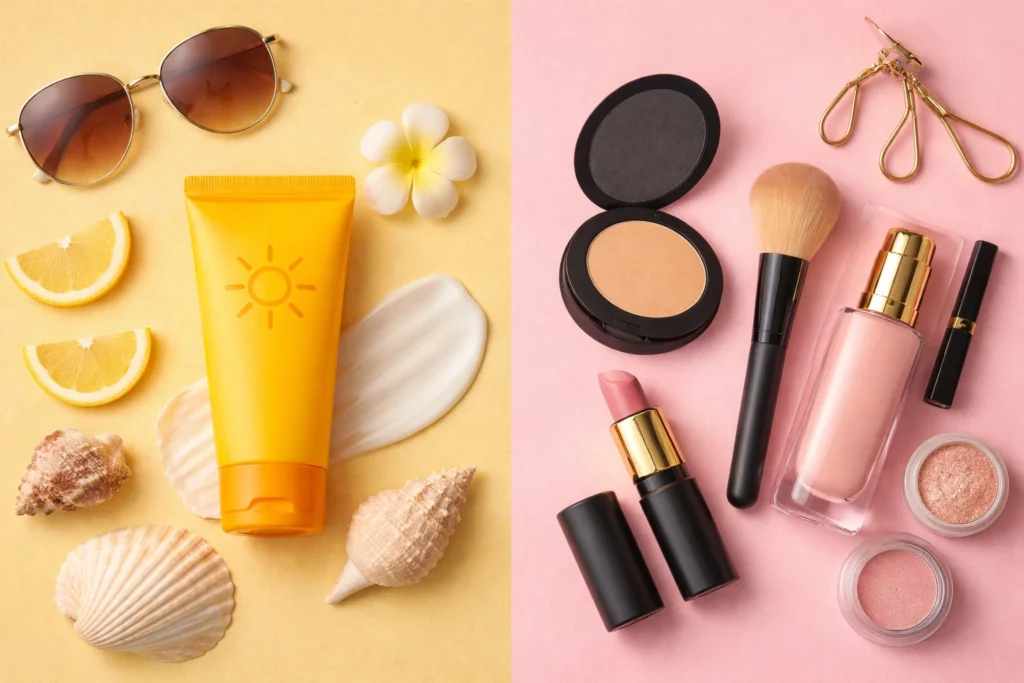
Here is the ideal routine:
Cleanser
Toner (optional)
Serum
Moisturiser
Sunscreen (mandatory!)
Primer
Foundation / Concealer
Makeup
Make sure your sunscreen has:
✔ SPF 30 or higher
✔ Broad-spectrum (UVA + UVB)
✔ PA+++ or above
Why Sunscreen Must Touch Your Skin Directly
Sunscreen protects you by forming a thin film that either absorbs UV rays (chemical filters) or reflects them (mineral filters).
If foundation sits between your skin and sunscreen, that protective film breaks.
This can lead to:
- Uneven sun protection
- Faster pigmentation
- Premature wrinkles
- Increased risk of sun damage
How Long Should You Wait After Sunscreen?
Before starting your makeup, wait 1–2 minutes after applying sunscreen.This allows it to settle and form an even protective layer.
What If You Wear Makeup and Need Reapplication?
Sunscreen should ideally be reapplied every 2–3 hours, but makeup makes this tricky.Here’s what you can do:
- Use a Sunscreen Spray or Mist
Just spray it lightly over makeup.
- Use SPF Compact or Powder Sunscreen
Perfect for touch-ups without smudging makeup.
- SPF Setting Spray
A quick and easy shield on the go.
Types of Sunscreens for Under Makeup
✨ 1. Gel Sunscreens
Lightweight, non-sticky, great for oily and acne-prone skin.
✨ 2. Matte Finish Sunscreens
Helps control oil and keeps makeup in place.
✨ 3. Hybrid Sunscreens (Chemical + Mineral)
Comfortable under makeup and leave no white cast.
What Your Sunscreen Must Contain
Always check these three things on your sunscreen label:
✔ SPF 30 or higher
✔ Broad-spectrum (UVA + UVB protection)
✔ PA+++ or PA++++
These ensure complete sun protection.
How Much Sunscreen Should You Apply?
Most people under-apply sunscreen.
Use the 2-finger rule:
Squeeze sunscreen along your index and middle finger — that is the correct amount for your face and neck.
Without this amount, even the best sunscreen cannot give you full protection.
How to Reapply Sunscreen Over Makeup
Sunscreen should ideally be reapplied every 2–3 hours, but makeup makes it tricky.
Here are the best solutions:
💁♀️ Sunscreen Spray / Mist
Spray lightly over makeup
Pat gently
💁♀️ SPF Compact / Powder
Great for oily skin
Perfect for touch-ups
💁♀️ SPF Setting Spray
Locks makeup and adds protection
These options maintain both your makeup and your skin safety.
Do You Need Sunscreen Indoors?
Yes — especially if you sit near windows, screens, or spend time driving.
UVA rays penetrate glass and cause:
- Pigmentation
- Fine lines
- Collagen breakdown
Daily sunscreen protects you from invisible aging even indoors.
Does SPF in Makeup Replace Sunscreen?
No.
Foundation, BB creams, and moisturizers with SPF do not replace proper sunscreen.
You would need to apply an unrealistic amount of makeup to get the labeled SPF protection.
Always use standalone sunscreen first.
Benefits of Correct Sunscreen Placement
When you apply sunscreen before makeup, you get:
- Even UV protection
- Brighter skin over time
- Reduced pigmentation
- Slower aging
- Better makeup finish
- Healthier skin barrier
❌ Common Sunscreen Mistakes to Avoid
- Using too little (you need 2 fingers rule amount)
- Applying sunscreen only when going outdoors
- Using SPF in moisturiser + makeup only (this is not enough!)
- Not reapplying during long daytime hours
Sunscreen for Different Skin Types
Oily Skin: Gel or matte sunscreen
Dry Skin: Cream or lotion sunscreen
Sensitive Skin: Mineral or hybrid sunscreen
Acne-Prone Skin: Non-comedogenic, gel formula
How Sunscreen Improves Your Makeup Look
Correct sunscreen placement:
- Prevents foundation from oxidizing
- Stops makeup from separating
- Creates a smoother base
- Reduces cakiness
Good skin protection equals better makeup results.
How Sunscreen Impacts Long-Term Skin Health
Applying sunscreen correctly is not just about preventing sunburn—it plays a critical role in your skin’s long-term health and appearance. When sunscreen is applied before makeup and consistently, it helps your skin function better over time.
Long-Term Benefits of Daily Sunscreen Use
Regular sunscreen application supports:
Regular sunscreen application supports:
- Stronger skin barrier function
- Reduced collagen breakdown
- Slower development of fine lines and wrinkles
- Prevention of stubborn sun spots and melasma
- Lower risk of photoaging and UV-related skin damage
Sun exposure causes oxidative stress in skin cells. Sunscreen minimizes this stress, allowing your skin to repair and renew itself more efficiently.
How UV Damage Shows Up Over Time
Unprotected sun exposure may lead to:
- Uneven skin tone
- Loss of elasticity
- Enlarged pores
- Dull complexion
- Accelerated skin aging
These changes happen gradually, making sunscreen one of the most powerful preventive skincare products.
Why Consistency Matters More Than SPF Strength
A higher SPF alone is not enough. Consistent daily use matters more.
- SPF 30 blocks ~97% of UVB rays
- SPF 50 blocks ~98% of UVB rays
The real difference comes from regular reapplication, not just the number on the bottle.
For women-focused lifestyle and wellness insights, visit Wordsfloww.
Final Verdict
Always apply sunscreen before makeup—never after.
This ensures your skin stays protected, youthful, and safe from sun damage.

Neha Bhandari is a mom and parenting writer who shares practical, easy-to-understand guidance for new parents. Through Wordsfloww, she writes about newborn care, baby sleep, feeding, early development, and the everyday challenges of parenthood. Her goal is to make the early years feel a little less overwhelming with simple, research-informed guidance and relatable experiences.