


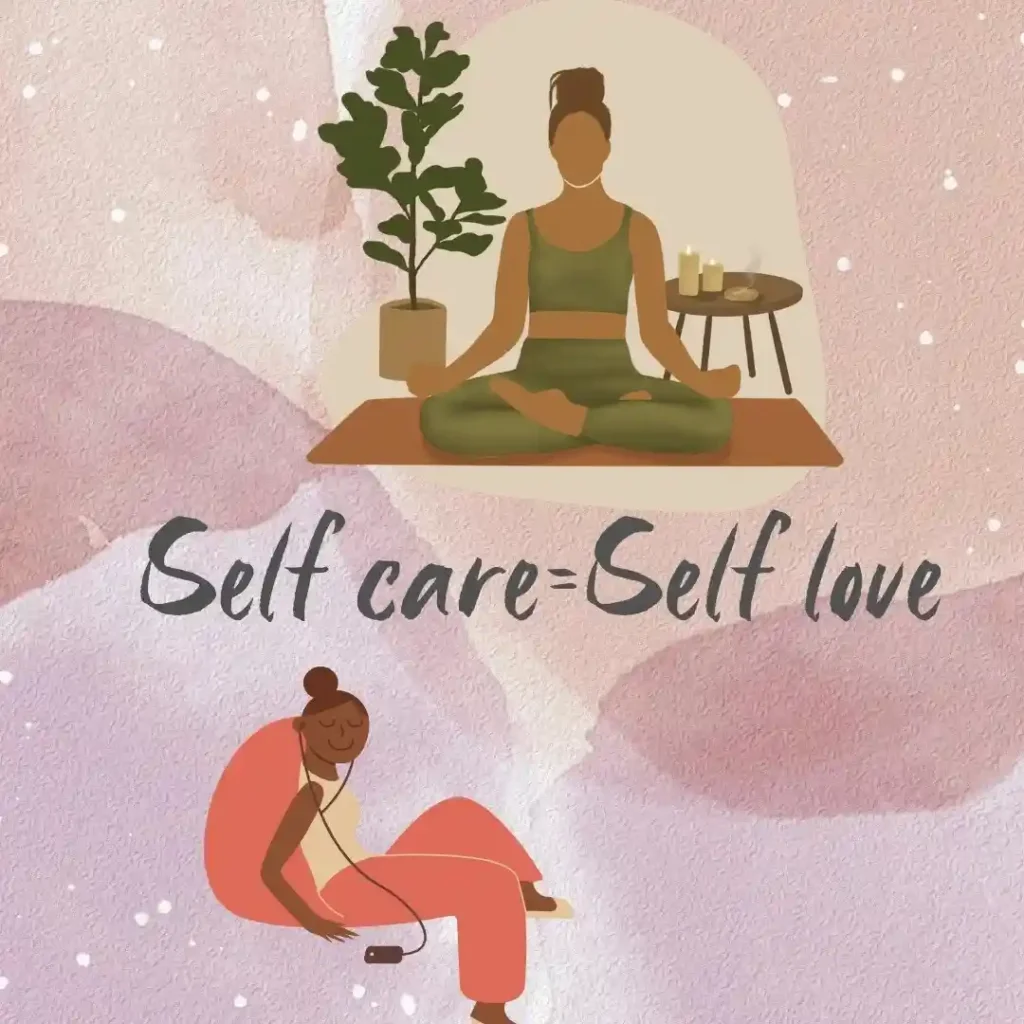
Self care is self love, even when the world tells you to keep pushing, producing, and ignoring your own needs.
We frequently overlook the most crucial relationship of all—our relationship with ourselves. In a world that values constant activity and productivity, caring for yourself often feels optional. It isn’t.
Caring for yourself shows self-respect. It does not signal selfishness.When you take care of your body, mind, and soul, you send yourself a powerful message:I deserve love, respect, and happiness.
💗 The Link Between Self-Love and Self-Care
Self-love is the belief that you deserve kindness.
Self-care is how you practice that belief every day.
You show self-love when you:
- Rest instead of overworking
- Eat nourishing meals instead of skipping them
- Set boundaries instead of people-pleasing
- Choose yourself without guilt
These small choices remind you that your needs matter.
🌿 Everyday Self-Care Practices That Reflect Love
Self-care does not have to feel complicated. Simple habits often work best.
Morning rituals – Start your day with affirmations, journaling, or meditation
Mindful eating – Choose foods that energize you, not drain you
Digital detox – Step away from screens to reconnect with yourself
Creative expression – Write, paint, dance, or sing to nourish your soul
Rest without guilt – Sleep heals; it is not laziness
Consistency matters more than perfection.
🌿 How Self-Care Helps You Reconnect With Your Inner Voice
In a noisy world, many people lose touch with their inner voice. Opinions, advice, and expectations come from every direction. Over time, this noise makes it hard to recognise what you truly want.what are the things that makes your heart go .
Self-care creates quiet moments. In that quiet, clarity begins to return.
When you slow down, you start noticing:
- What drains your energy
- What genuinely brings calm
- What feels right instead of forced
These insights often appear when you step away from constant stimulation. Silence, rest, and intentional pauses help you hear yourself again.
Simple self-care practices that support inner connection include:
- Spending a few minutes alone without screens
- Writing thoughts freely without editing
- Taking mindful walks in nature
- Practising deep breathing during stressful moments
Reconnecting with your inner voice improves decision-making. You rely less on external validation and more on self-trust. Over time, this builds confidence and emotional stability, where you listen to yourself without losing you .
Ignoring your limits, however, can show up as signs you are emotionally drained.
Listening to yourself does not mean isolating from others. It means checking in with yourself before reacting, committing, or comparing. This awareness allows you to live with more intention and less regret.
Signs You Are Neglecting Self-Care (Without Realizing It)
Neglecting self-care does not always look dramatic. Sometimes, it hides in daily habits.
You might be ignoring self-care if you:
Many of these behaviors are also common signs you are emotionally drained, even if you don’t consciously feel “burnt out.”
- Feel tired even after a full night’s sleep
- Get irritated over small things
- Say “yes” when you want to say “no”
- Feel disconnected from yourself
- Put everyone else’s needs first—always
These signs do not mean you are weak. They mean you are human. Noticing them is the first step toward change.
What Self-Care Is NOT (Let’s Clear the Confusion)
Self-care often gets misunderstood, so let’s clear that up.
Self-care is not:
- Being selfish or lazy
- Ignoring responsibilities
- Buying expensive things to feel better
- Running away from problems
- Trying to live a “perfect” lifestyle
Real self-care looks simple. It looks like rest. Boundaries. Honest conversations. Choosing what truly supports your well-being—even when it feels uncomfortable at first.
Remember “self care is self love”:
🤍 How Self-Care Affects Relationships
When you restore your own energy, you show up differently for others.
By caring for yourself, you can:
- Build healthier boundaries
- Reduce resentment
- Respond with patience instead of frustration
- Attract relationships that mirror self-respect
Healthy relationships often begin with how you treat yourself.
✨ How Self-Care Transforms Your Life
When self-care becomes part of your routine, meaningful changes follow.
Inner calm – Stress reduces and clarity increases
Stronger relationships – You give love without depletion
Emotional resilience – Small acts build lasting strength
Authentic living – You reconnect with who you truly are
Transformation does not arrive overnight. It grows quietly through daily care.
Many people think something is wrong with them, when in reality life feels hard and you’re missing joy because of constant comparison and pressure—not a lack of self-love.

Self-Care During Different Phases of Life
Self-care is not one-size-fits-all. Your needs change as life changes. What worked before may not support you now—and that’s okay.
During busy or demanding phases, self-care may look simple:
- Prioritising rest over productivity
- Eating regularly instead of perfectly
- Allowing flexibility instead of control
In emotionally heavy phases, self-care may focus on:
- Creating emotional safety
- Asking for support
- Reducing unnecessary pressure
During calmer periods, self-care may expand into:
- Personal growth
- Learning new habits
- Strengthening boundaries
Understanding this flexibility reduces guilt. You stop forcing routines that no longer fit your life.
Helpful reminders during changing phases:
- Self-care adapts with you
- Progress looks different at every stage
- Rest is productive when life feels heavy
When you adjust self-care to your current reality, it becomes sustainable. You avoid burnout and unrealistic expectations. Instead of chasing perfection, you focus on balance.
One simple form of self-care that helped me reconnect with myself was journaling—in I tried journaling for 30 days, I share how this daily practice changed my mindset and emotional awareness.
Honouring your needs during each phase strengthens resilience. It teaches you to respond with compassion rather than criticism. Over time, this approach builds a healthier, more peaceful relationship with yourself.
Why Self-Care Is Not Selfish (Let’s Clear the Guilt)
Many people hesitate to practice self-care because guilt shows up first. You may feel selfish for resting, saying no, or prioritizing yourself. This belief often comes from how society defines productivity and worth.
Self-care does not mean ignoring others. It means ensuring you are well enough to care for them without burning out.
Self-care is not selfish because:
- You cannot pour from an empty cup
- Rest improves focus, patience, and emotional balance
- Taking care of yourself prevents long-term exhaustion
When you meet your own needs, you show up more present and emotionally available. That benefits everyone around you.
Think of self-care as maintenance, not indulgence. Just like your phone needs charging, your mind and body need regular care to function well.
Building a Sustainable Self-Care Routine That Actually Lasts
Many people start self-care routines but quit because they feel overwhelming. A sustainable routine feels realistic, not perfect.
The key lies in simplicity and consistency.
Here’s how to build one that lasts:
- Choose 1–2 habits, not ten
- Match habits to your lifestyle
- Focus on progress, not perfection
Examples of sustainable self-care:
- Five minutes of deep breathing
- A short walk after meals
- Limiting screen time before bed
- Drinking enough water daily
Consistency matters more than intensity. Small habits practiced daily create long-term balance.
Also, allow flexibility. Some days you will do more. Some days, rest itself becomes self-care. Both are valid.
A routine that supports your real life will always work better than one designed for social media.
Emotional Self-Care: The Most Ignored Yet Most Important Form
Many people focus on physical self-care but forget emotional well-being. Emotional self-care involves acknowledging feelings instead of suppressing them.
You practice emotional self-care when you:
- Allow yourself to feel without judgment
- Express emotions instead of bottling them up
- Give yourself grace during difficult days
Ignoring emotional needs often leads to:
- Mood swings
- Mental fatigue
- Feeling disconnected from yourself
Simple emotional self-care practices include:
- Journaling your thoughts
- Taking mindful pauses during the day
- Talking honestly with someone you trust
- Choosing rest when emotions feel overwhelming
When you care for your emotions, you build inner stability. This stability helps you respond thoughtfully instead of reacting impulsively.
Creating Boundaries Without Guilt or Fear
Boundaries protect your time, energy, and mental peace. Yet many people struggle to set them because they fear disappointing others.
Healthy boundaries do not push people away. They teach others how to treat you.
You may need stronger boundaries if:
- You feel resentful after saying yes
- You constantly put others first
- You feel exhausted by social interactions
Ways to set gentle but firm boundaries:
- Communicate clearly and calmly
- Avoid over-explaining your choices
- Respect your own limits consistently
Boundaries create space for self-respect. Over time, they reduce stress and increase confidence. When you honour your boundaries, you reinforce the message that your well-being matters.
Read more personal growth and self-improvement content on Wordsfloww.
Final Thoughts: Choosing Yourself Every Day
How you treat yourself shapes the kind of love and respect you allow into your life.
Self-care is not an occasional reward. It is a non-negotiable habit—just like eating, breathing, and sleeping.
Each act of care becomes a reminder that you are valuable, whole, and worthy.
When you choose yourself every day, your life slowly begins to feel lighter, calmer, and more aligned. 🌱

Neha Bhandari is a mom and parenting writer who shares practical, easy-to-understand guidance for new parents. Through Wordsfloww, she writes about newborn care, baby sleep, feeding, early development, and the everyday challenges of parenthood. Her goal is to make the early years feel a little less overwhelming with simple, research-informed guidance and relatable experiences.